
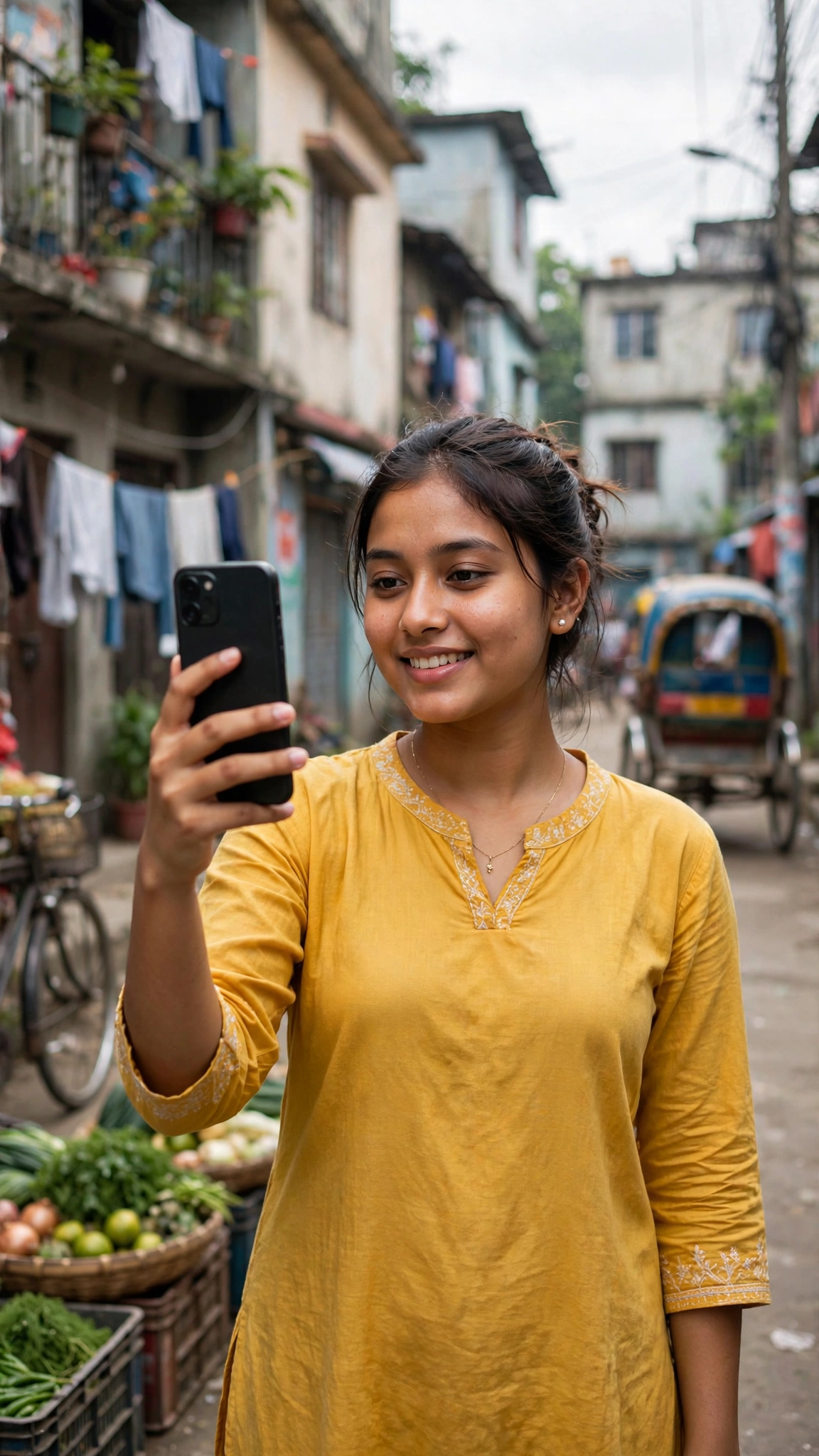
Riya is nineteen. She films in the lane outside her family's shop, edits on the same phone, and has never signed anything with anybody. Last month she earned more than the shop did.
We spent a day with her, mostly to answer one question: what does the infrastructure actually have to do for someone like this, and what does it need to stay out of the way of?
The morning
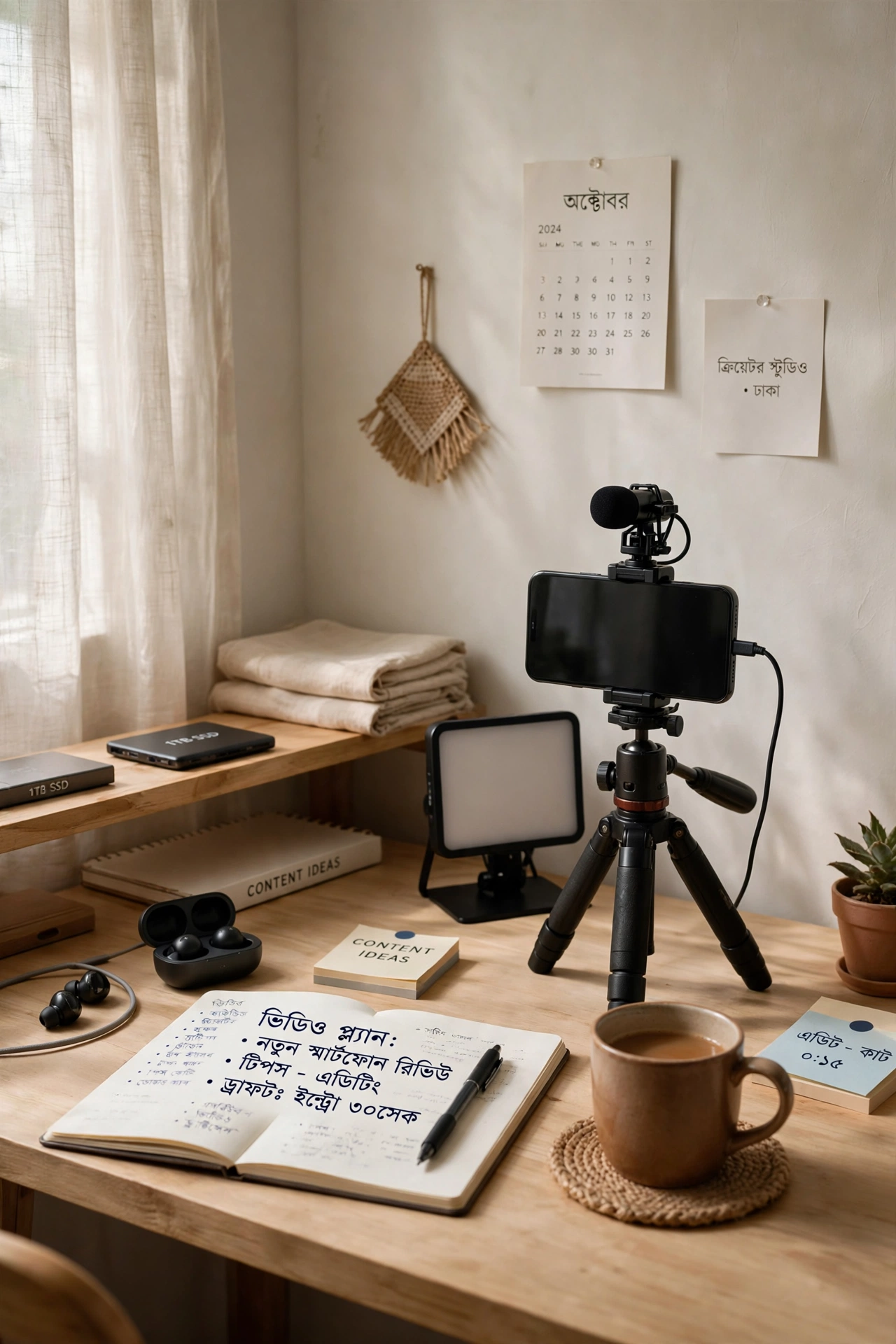
She films between nine and eleven, because that is when the lane has light and before it has traffic. Three or four takes, no script, and a rough idea carried over from the night before. Editing happens on the bus.
Nothing in that workflow is a compromise waiting to be upgraded. It is the workflow. Every tool we have offered that assumed a desk has gone unused.
What sovereignty looks like in practice
For most of the last decade, a creator at Riya's scale in Bangladesh had two options: route through an agency in Mumbai that took a cut and owned the relationship, or take brand deals directly and hope to be paid.
"I don't want a manager. I want the money to arrive and the number to be the number."
That sentence is the entire product requirement. Payouts in taka, to a local account, on a schedule she can predict, with a dashboard that shows the same figure she will actually receive — not a gross number she has to learn to discount.
What she does not need from us
- Editing tools. Hers are fine and she is faster in them than in ours.
- Content suggestions. She reads her own comments and knows her audience better than any model we could point at it.
- A growth programme. She has grown fine.
What she needs is monetization that does not require her to become someone else's inventory. That is a narrower job than the platforms usually describe, and a harder one.